
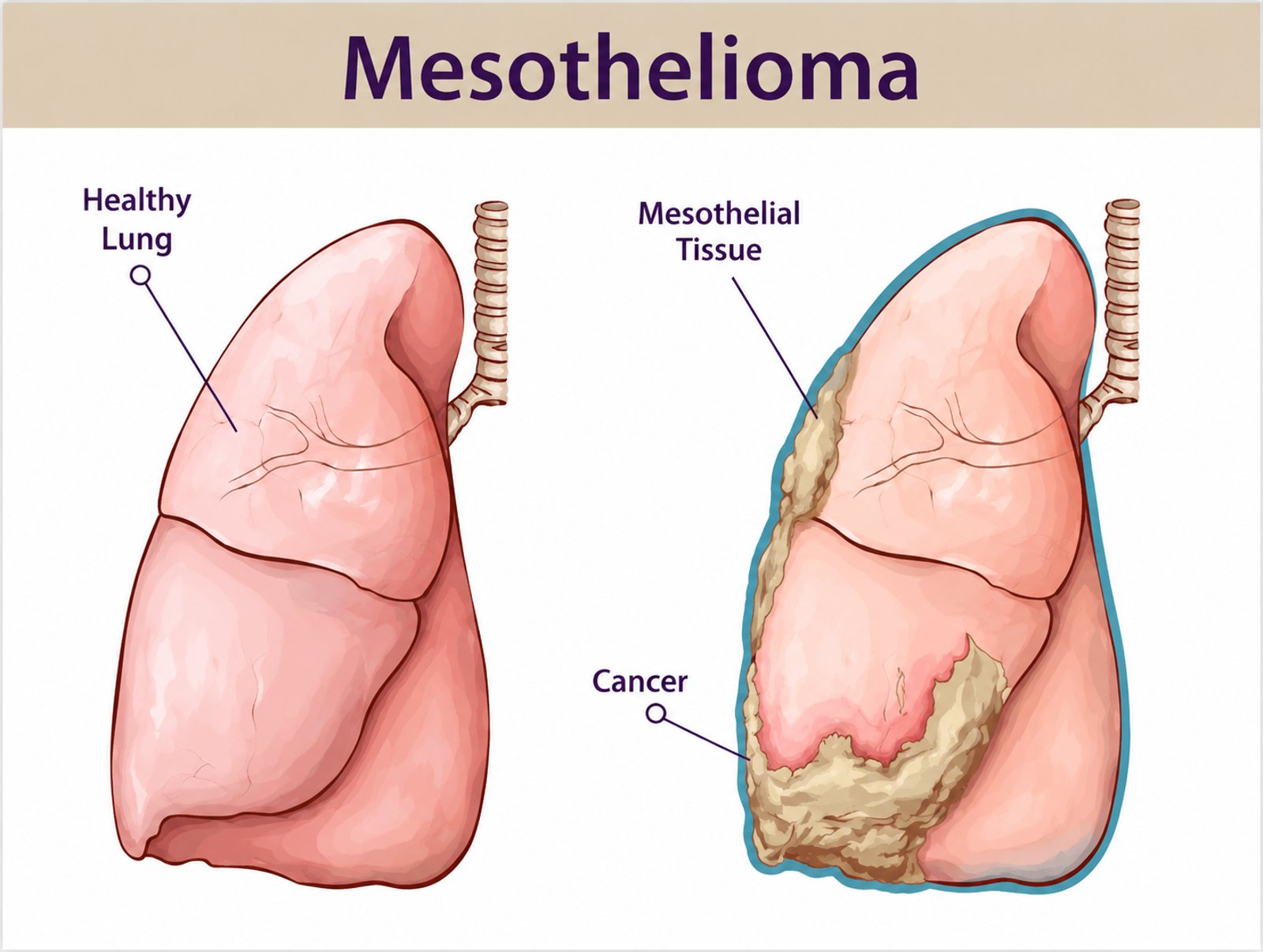
What is Mesothelioma?
Mesothelioma is a rare type of cancer. It mainly affects the lining of the lungs or abdomen. Most cases are linked to exposure at work. In fact, many people develop mesothelioma after coming into contact with asbestos. Asbestos is a group of minerals once used in construction and factories. Because of its link to occupational cancer risks, mesothelioma is often called an occupational cancer. According to the World Health Organization (WHO), thousands of new cases are reported each year worldwide.
Symptoms of Mesothelioma
Mesothelioma symptoms can take years to appear. Often, they are mistaken for other illnesses. However, early detection is important. Watch for these common signs:
Because these symptoms are not unique to mesothelioma, it is important to see a doctor if you have a history of asbestos exposure.
Causes and Risk Factors
Mesothelioma is most often caused by breathing in asbestos fibers. These tiny fibers can get trapped in the lungs or abdomen. Over time, they cause damage that may lead to cancer. Occupational exposure is the main risk factor. For example, people who worked in shipyards, construction, or factories are at higher risk. In addition, family members of workers can be exposed through dust on clothing. Other risk factors include:
According to the Centers for Disease Control and Prevention (CDC), there is no safe level of asbestos exposure. Even small amounts can increase your risk.
Diagnosis of Mesothelioma
Doctors use several steps to diagnose mesothelioma. First, they ask about your symptoms and work history. Next, they may order imaging tests, such as X-rays or CT scans. These tests help find tumors or fluid buildup. If needed, a biopsy is done. This means a small tissue sample is taken and checked for cancer cells. Because mesothelioma can look like other diseases, getting the right diagnosis is important. Early diagnosis can help improve treatment options.
Treatment Options
Mesothelioma treatment options depend on the stage and location of the cancer. Doctors may use one or more of the following:
Because each case is different, your doctor will suggest the best plan. New treatments are being studied in clinical trials. Therefore, ask your doctor about the latest options.
Prevention and Workplace Safety
Preventing mesothelioma starts with avoiding asbestos exposure. Many countries now have strict rules about asbestos use. However, older buildings and products may still contain it. To reduce your risk:
Employers must provide training and safety equipment. If you think you have been exposed, talk to your doctor right away.
Living with Mesothelioma: Lifestyle and Support
Living with mesothelioma can be challenging. But support is available. For example, joining a support group can help you cope. Eating a healthy diet and staying active may improve your well-being. In addition, counseling can help with stress or anxiety. Family and friends play a key role in your care. Many hospitals offer resources for patients and caregivers. Remember, you are not alone on this journey.
Consult Dr. Shree Shyam Clinic for personalized advice on mesothelioma diagnosis and treatment.